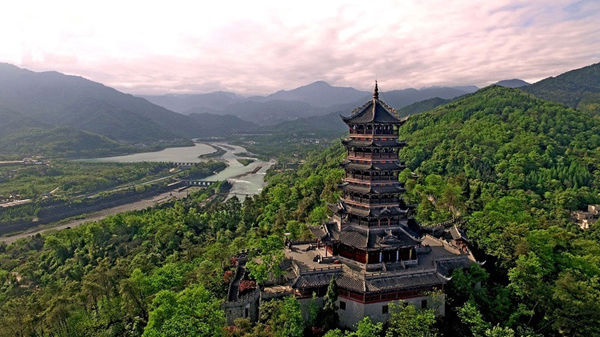
Qingcheng Mountain and the Dujiangyan Irrigation System
Introduction
Qingcheng Mountain and the Dujiangyan Irrigation System are iconic cultural sites located on the northwest edge of the Chengdu Plain in Sichuan province, China. These two sites are celebrated for their historical significance and their contributions to both cultural and technological advancements. Qingcheng Mountain is renowned as one of the cradles of Taoism, showcasing over 20 ancient temples and religious sites that embody the Taoist culture and the Sichuan architectural style. The mountain's natural beauty and spiritual ambiance have made it a favored retreat for Taoist practitioners and visitors seeking tranquility and self-cultivation.
The Dujiangyan Irrigation System, established in the 3rd century BC, remains a marvel of ancient engineering. Built to control the waters of the Minjiang River, it distributes water to the fertile farmlands of the Chengdu Plain. This irrigation system, constructed without the use of dams, is recognized for its innovative use of natural hydrological features to manage water resources effectively. It continues to play a vital role in flood control, irrigation, water transport, and general water consumption, making it one of the earliest and most enduring irrigation systems in China.
In recognition of their historical and cultural importance, Qingcheng Mountain and the Dujiangyan Irrigation System were collectively designated as a UNESCO World Cultural Heritage Site in 2000. These sites not only reflect the ingenuity of ancient Chinese engineering and the deep roots of Taoist culture but also stand as testaments to the harmony between human civilization and the natural environment.
History
The history of Dujiangyan Irrigation System dates back to the Warring States Period when the region was frequently plagued by flooding from the Minjiang River. The Qin governor, Li Bing, was tasked with resolving this issue and after extensive investigation, he devised an innovative solution. Rather than constructing a dam, which would have disrupted navigation and military logistics, Li Bing proposed building an artificial levee to divert a portion of the river's flow and cutting a channel through Yulei Mountain to manage excess water.
Funded by King Zhao of Qin, Li Bing and his team of thousands embarked on the monumental project. The construction involved using bamboo baskets filled with stones to create a levee, while the channel through the mountain was carved using a combination of fire and water to crack the hard rock. After eight years of labor, the project was completed, effectively ending the cycle of floods and transforming Sichuan into one of China's most agriculturally productive regions. A shrine was erected in Dujiangyan to commemorate Li Bing's achievements.
Qingcheng Mountain's historical significance is closely tied to the development of Taoism. It is the birthplace of this philosophy, where in 142, the philosopher Zhang Ling founded the doctrine of Chinese Taoism. The mountain became a center of Taoist practice, hosting numerous temples built during many dynasties. These temples served as hubs for Taoist teachings and spiritual retreats, cementing Qingcheng Mountain's status as an intellectual and spiritual center for Taoism.
Geography
Qingcheng Mountain and the Dujiangyan Irrigation System are strategically located at the junction between the Sichuan Basin and the Qinghai-Tibet Plateau, approximately 70 kilometers northwest of Chengdu. Qingcheng Mountain is characterized by its lush greenery, undulating peaks, and serene landscapes, offering picturesque views that captivate visitors throughout the year. The mountain's dense forests and tranquil hiking trails provide an ideal setting for those seeking a harmonious blend of natural beauty and cultural exploration.
The Dujiangyan Irrigation System is situated at an altitude of 726 meters, marking the highest point of the Chengdu Plain. It is ingeniously integrated into the natural topography, utilizing the features of the Minjiang River's upper valley to manage water flow and sediment. The system's key components include the Yuzui Bypass Dike, the Feishayan Floodgate, and the Baopingkou Diversion Passage, all of which work in concert to ensure a consistent water supply to the Chengdu Plain.
The geographical location of these sites not only highlights their engineering brilliance but also underscores their role in sustaining the fertile farmlands of the region. The ecological harmony achieved through the Dujiangyan Irrigation System exemplifies ancient China's ability to harness natural resources for sustainable development.
Architecture
The architectural features of Qingcheng Mountain reflect the ingenuity and aesthetic sensibilities of ancient China. Qingcheng Mountain is home to over 70 Taoist temples and religious sites, each showcasing the traditional Sichuan style of architecture. These structures are seamlessly integrated into the natural landscape, harmonizing with the surrounding forests and mountains. Notable temples include the Natural Picture, the Celestial Master's Cave, and the Palace of Celestial Freshness, each contributing to the mountain's spiritual and cultural ambiance.
The Dujiangyan Irrigation System is an engineering marvel, utilizing natural hydrological features in its design. The system's architecture is characterized by the use of bamboo baskets filled with stones, wooden tripods, and strategically placed dikes to manage water flow. The absence of dams in the system's construction is a testament to the innovative approach taken by its creators, who leveraged the natural topography to achieve effective water management.
Both Qingcheng Mountain and the Dujiangyan Irrigation System exemplify the harmonious integration of architecture and nature, reflecting a deep respect for the environment and a commitment to sustainable development. Their architectural significance continues to inspire admiration and study, offering valuable insights into the cultural and technological achievements of ancient China.
Taoist Culture
Qingcheng Mountain is a quintessential representation of Taoist culture in China. As one of the birthplaces of Taoism, the mountain has been a focal point for spiritual practice and philosophical exploration for centuries. The Taoist religion, founded by Zhang Daoling in the Eastern Han Dynasty (25-220), is deeply rooted in the teachings of Laozi and emphasizes the harmony between humanity and nature, the virtues of leisure and tranquility, and a positive outlook on the metaphysical.
The mountain's temples and religious sites serve as living symbols of Taoist heritage, offering a serene environment for self-cultivation and spiritual reflection. Major religious sites on the mountain include the Natural Picture, the Celestial Master's Cave, and the Hall of the Ancestral Masters, each contributing to the rich tapestry of Taoist culture. The Celestial Master's Cave, for instance, houses statues of legendary figures such as Fuxi, Shennong, and Xuanyuan, highlighting the historical depth of Taoist beliefs.
Qingcheng Mountain's Taoist culture is further enriched by its association with key Taoist figures and teachings. The mountain has served as a sanctuary for Taoist practitioners, providing a peaceful retreat for meditation and introspection. The blend of natural beauty and spiritual heritage makes Qingcheng Mountain a compelling destination for those seeking to experience the profound essence of Taoism.
Environmental Impact
The environmental impact of Qingcheng Mountain and the Dujiangyan Irrigation System is profound, showcasing a sustainable relationship between human activity and the natural environment. The Dujiangyan Irrigation System, in particular, exemplifies ecological engineering at its finest. By utilizing natural hydrological features and gravity for water diversion, the system minimizes environmental disruption while maximizing agricultural productivity. It has been instrumental in transforming the Chengdu Plain into a highly fertile region, supporting both agriculture and local biodiversity.
Qingcheng Mountain, with its dense forests and diverse ecosystems, serves as a vital ecological habitat. The mountain's natural environment supports a wide range of flora and fauna, contributing to the region's biodiversity. The preservation of this natural landscape is integral to maintaining the ecological balance and ensuring the sustainability of both the mountain and the irrigation system.
The harmonious integration of human innovation and environmental stewardship at these sites highlights the enduring value of traditional ecological knowledge. Qingcheng Mountain and the Dujiangyan Irrigation System stand as exemplars of sustainable development, demonstrating the potential for human civilization to coexist with and benefit from the natural world.
Tourism
Qingcheng Mountain and the Dujiangyan Irrigation System are popular tourist destinations, attracting visitors from around the world with their unique blend of cultural heritage and natural beauty. Qingcheng Mountain offers a variety of activities and experiences for tourists, from hiking along scenic trails to participating in spiritual retreats at its Taoist temples. The mountain's serene landscapes, ancient architecture, and tranquil atmosphere provide a perfect setting for relaxation and introspection.
The Dujiangyan Irrigation System, as a marvel of ancient engineering, offers educational tours that delve into its historical significance and technological innovations. Visitors can explore the system's key components, including the Yuzui Bypass Dike and Baopingkou Diversion Passage, gaining insights into the ingenuity of ancient water management practices.
Both sites are celebrated for their role in preserving Chinese cultural and natural heritage, with their inclusion in the UNESCO World Heritage list further enhancing their appeal to international tourists. The annual influx of visitors contributes to the local economy and promotes cultural exchange, while also raising awareness of the importance of preserving these invaluable sites for future generations.








